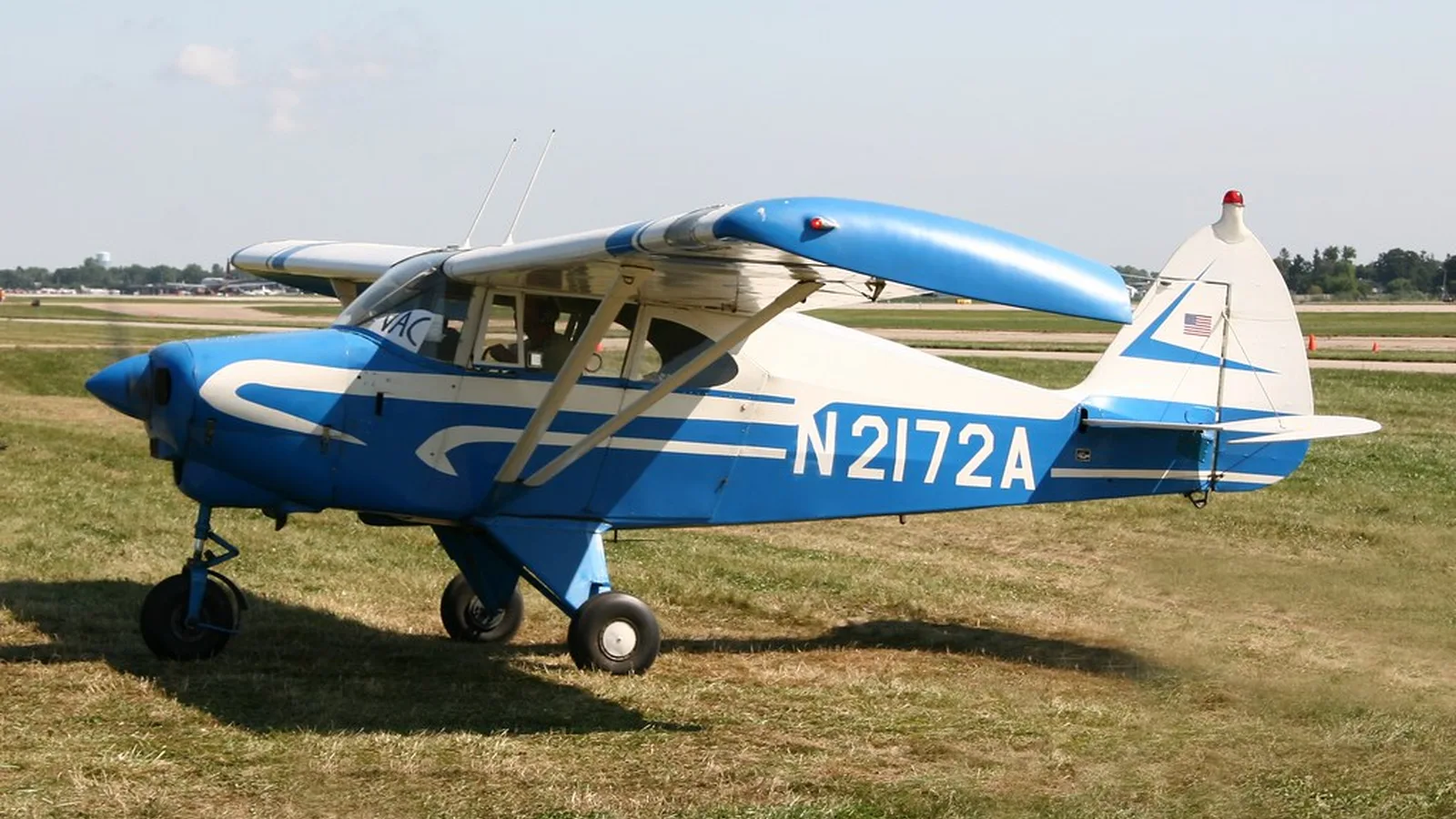
The PA-22 Tri-Pacer market this morning
What does a used PA-22 Tri-Pacer ask right now?
With 12 for sale this morning, the Piper PA-22 Tri-Pacer is the 32nd most-listed piston type on Barnstormers and second to the Piper PA-28 Cherokee among Piper types. 5 were listed in the last 30 days and 5 came down, about the same churn as the rest of the class. 2 of them are in FL.
Asking prices run from $10,000 to $89,500, and half of the 9 priced listings sit between $34,500 and $65,000. The median is $49,000, 52% below the piston singles median of $102,249; it is the cheapest Piper type with a page here. Age matters: 1950s airframes ask a median of $35,000 against $38,750 for the 1960s.
2 sellers cut price in the last 30 days, 17% of the live fleet against 27% across every type we track; the average cut took 10% off the ask.
Set against every other type, the PA-22 Tri-Pacer also appears in our note on which models get their price cut most often, with the sample behind each figure.
Written from this morning's figures and how they compare with the other types on the site. It changes as the market does.
By variant
| Variant | Seen | Live | Median ask |
|---|---|---|---|
| PA-22-160 | 5 | 2 | $43,500 |
| PA-22-135 | 3 | 1 | $35,000 |
Only listings whose title names a variant. Median is over live, priced listings of that variant.
Asking price distribution
Asking prices as typed by the seller. "Call" and "make offer" are counted as unpriced.
Median asking by decade
| Built | Seen | Median ask | Cut rate |
|---|---|---|---|
| 1950s | 12 | $35,000 | 25% |
| 1960s | 4 | $38,750 | 25% |
Year is read from the seller's title, so 48% of PA-22 Tri-Pacer listings don't have one. They count everywhere else on this page but not in this table.
Be first to the next PA-22 Tri-Pacer that lists or drops
One Telegram message the morning a PA-22 Tri-Pacer appears in your budget, and another the day a seller cuts, with days listed and where the ask sits against these 12. Free during beta.
Buyer's notes
About the Piper PA-22 Tri-Pacer
What it is
The PA-22 Tri-Pacer is the four-seat, high-wing, tube-and-fabric airplane Piper built from 1951 to 1960, in the neighborhood of eight thousand of them, and it put a nosewheel in front of a generation of pilots raised on taildraggers. It is a PA-20 Pacer with the gear turned around: a short-coupled fuselage on a wide stance, a sprung nose gear, and 125, 135, 150 and finally 160 hp Lycomings. The two-seat, flapless PA-22-108 Colt from 1961 to 1964 used the same fuselage as a trainer.
It flies like what it is, a small four-seater that gets off the ground quickly, cruises about with a 172 and lands flat and firmly on gear that expects it. The rudder and ailerons are interconnected by bungee, which surprises pilots on their first crosswind landing. Owners like the useful load for the size and the fact that it can be kept going for very little. "Flying Milk Stool" is the nickname and owners use it fondly.
Variants that matter for price
Sellers list the horsepower: PA-22-125, -135, -150 and -160. The 150 and 160 hp airplanes are the ones buyers hunt, and a 135 upgraded to 150 or 160 hp under STC is common. The 125 hp versions and the stripped-down Caribbean sit at the bottom, and the 108 hp Colt is priced as a two-seat trainer. Taildragger conversions are their own category: a Tri-Pacer converted under STC to conventional gear (sellers write PA-22/20 or "Pacer conversion") sells for more than the same airplane on a nosewheel, and an original PA-20 Pacer sells for more again. A recent synthetic recover, metalized wings, gap seals, a gross-weight increase and a modern radio each move the price.
What buyers check
Fabric and tubing. The fuselage is inspected at the tail post, the lower longerons, the door frames and the gear attach clusters, and the fabric gets a punch test and a look inside for rust. The lift struts corrode from the inside on all the fabric Pipers; sealed replacement struts or a recent documented inspection is expected. The nose gear takes a beating from flat landings and is inspected for cracks and elongated bolt holes. Fuel tanks in the wing roots are looked at for seepage. The O-290 is harder to support than the O-320, and a 160 hp O-320 with a fresh overhaul is the setup most buyers want. An annual tends to find worn nose-gear parts, cracked exhaust, tired shock struts, sticky brakes and small fabric patches.
Who it suits
The Tri-Pacer suits a pilot who wants four seats on a fabric-airplane budget and does not mind a small cabin and a modest cruise. It is not a long-legged traveler or a fit for four large adults. Buyers cross-shop the Cessna 170 and early 172, the Stinson 108 and the Cherokee 140.
How much does a used Piper PA-22 Tri-Pacer cost?
Asking prices on Barnstormers this morning run from $10,000 to $89,500, and the median is $49,000. The middle half of the 9 priced listings sit between $34,500 and $65,000. These are asking prices, not sale prices.
How many Piper PA-22 Tri-Pacers are for sale right now?
12 on Barnstormers as of Oct 18, 2026. 5 were listed in the last 30 days and 5 came down. PlaneSnipe has tracked 31 since Jul 19, 2026.
How long does a Piper PA-22 Tri-Pacer take to sell?
Not enough PA-22 Tri-Pacer listings have both appeared and closed yet to say. The survivor rate appears here once the cohort is large enough.
How often do Piper PA-22 Tri-Pacer sellers cut the price?
2 price cuts in the last 30 days against 12 live listings, averaging 10% off the previous ask. Cuts are logged when the asking price drops between two consecutive mornings.
Last 30 days
Which PA-22 Tri-Pacer sellers cut their price in the last 30 days?
| Aircraft | Where | Listed | Asking |
|---|---|---|---|
| 1958 PA22-160 Tri PacerOct 9 | — | 72 d | $39,500$34,500−13% |
| 1960 Tripacer 160 !metalized!Sep 29 | TN | 27 d | $53,000$49,000−8% |
For sale now
Which PA-22 Tri-Pacers are for sale right now?
Newest first. Days listed is counted from the morning we first saw the ad; listings that predate Jul 19, 2026 show the day we started watching.
| Aircraft | Where | Listed | Cuts | Asking |
|---|---|---|---|---|
| 1951 PA22/20 Project | CA | 2 d | – | $10,000 |
| PA22-20 150 HP Projects Plus | FL | 4 d | – | $27,500 |
| 1954 Piper Tri-pacer PA-22-135 | OH | 17 d | – | $35,000 |
| 1956 PA-22 Tripacer | FL | 23 d | – | $65,000 |
| 1960 Tripacer 160 !metalized! | TN | 27 d | 1 | $49,000 |
| 1960 Piper PA-22-160 | NM | 30 d | – | $52,500 |
| Beautiful 1958 Tri Pacer | OK | 38 d | – | $68,500 |
| PA-22 Tripacer | UT | 43 d | – | $89,500 |
| 1958 PA22-160 Tri Pacer | — | 72 d | 1 | $34,500 |
| Pa 22 Tripacers | — | 91 d | – | see ad |
| Tri Pacer | VA | 91 d | – | trade |
| PA22 Projects | ND | 91 d | – | make offer |
Cross-shop
What else does a PA-22 Tri-Pacer buyer look at?
Other Piper types with a page here, then the same class at a similar asking price.

Geography and method
Where are the PA-22 Tri-Pacers, and how are they counted?
Where they are
How we count
Barnstormers piston categories are read once a day. A listing is "delisted" after it is missing on two consecutive mornings. Days listed starts the morning we first saw the ad, so listings that predate Jul 19, 2026 are excluded from time-on-market figures. Prices are asking prices as typed by the seller. Nothing here is an appraisal. Full methodology.